

What you need to know
- Mouth ulcers can appear for a lot of reasons and often the cause is not something you need to worry about.
- In some cases, an increased number of mouth ulcers or recurring outbreaks can indicate that you have an underlying health condition.
- In this case, tackling the underlying health condition should be prioritised, and this will allow you to find relief from persistent mouth ulcers.
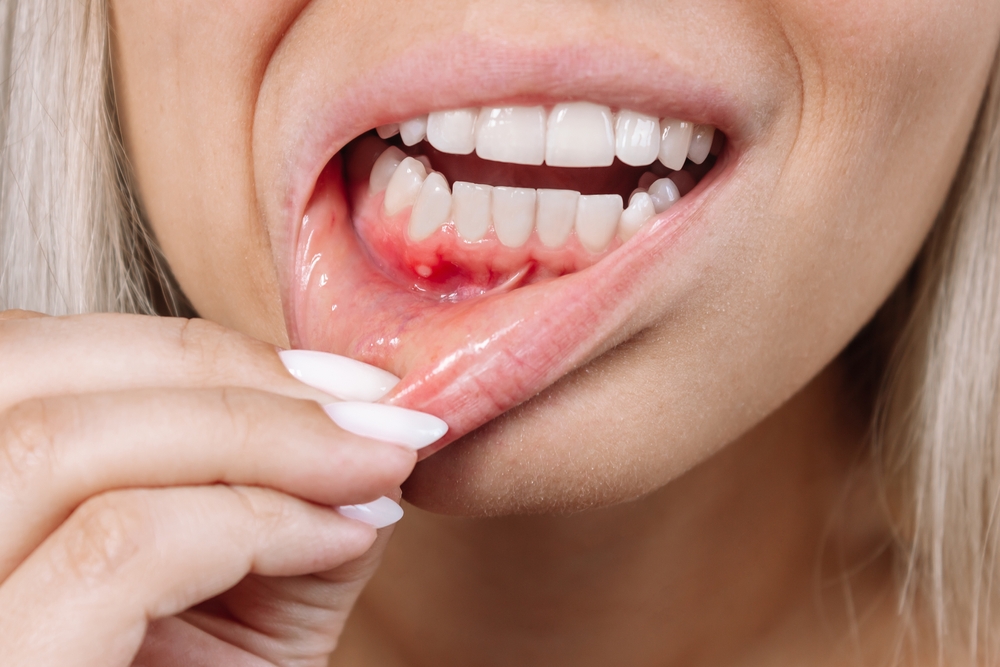
Ulcers are small raised patches that appear in the mouth.
They are often round or oval shaped with a red border and a gray or white centre.
There are a wide range of underlying health conditions that could lead to mouth ulcers.
What causes mouth ulcers?
Ulcers are small raised patches that appear in the mouth.
They can appear for a lot of reasons, including:
- Minor injuries to the mouth – biting your cheek, scratching the inside of your mouth or wearing poorly fitting braces or dentures can lead to mouth ulcers.
- Stress or anxiety – periods of high intensity mental or physical stress can lead to mouth ulcers.
- Food sensitivities – you might be unaware you have an allergy to certain foods like chocolate, coffee, nuts, citrus fruits or spicy items.
- Hormonal changes – many women will experience mouth ulcers as a result of hormonal changes during their menstrual cycle.
- Toothpaste allergy – something as simple as changing your toothpaste could lead to mouth ulcers if you are allergic to the ingredients.
It’s helpful to explore other potential issues, as ulcers in your mouth could be signalling an issue elsewhere in your body.
Underlying health issues causing ulcers
If you have persistent mouth ulcers or if you feel like they are more severe than usual, this could be an indicator that you have an underlying health condition.
Before you dismiss your mouth ulcers as a normal part of life, consider if you have any other symptoms that could indicate a wider health problem.
Nutritional deficiencies
If you are lacking in certain vitamins and minerals, this could show up in slowed healing, which can allow mouth ulcers to appear more often and more aggressively.
The most common culprits include iron, zinc, vitamin B12 and folic acid.
Alongside mouth ulcers, you might also experience increased fatigue and sleep disturbances.
Gastrointestinal disorders
If you have an issue impacting your gut, this can make it more difficult to absorb nutrients from your food.
This is common for individuals with Crohn’s disease and celiac disease.
You might experience mouth ulcers long before you have any noticeable intestinal problems.
If you have persistent mouth ulcers or if you feel like they are more severe than usual, this could be an indicator that you have an underlying health condition.
Weakened immune system
If your immune system is weakened or dysregulated for any reason, this could lead to chronic mouth ulceration.
This often appears in conditions such as HIV, lupus and Behçet’s disease.
Medications
Certain medications are known to cause mouth ulcers if they are used for a long period of time.
The most common culprits would be non-steroidal anti-inflammatory drugs and beta-blockers.
Oral cancer
A mouth sore that does not heal is a common sign of oral cancer.
If you have a mouth ulcer that does not heal after 3 weeks, it might be time to get this checked out.
When to see a physician for mouth ulcers
Most mouth ulcers will clear up on their own in a few weeks, but there are a few signs that you should be aware of.
- If an ulcer does not go away after 3 weeks and you have other symptoms such as fatigue, it would be a good idea to visit a physician.
- If your ulcers heal but you get them frequently, this could indicate an underlying health condition.
- If your ulcers appear anywhere else on your body or you experience joint pain or fatigue, seek medical advice.
- If you have an unusually large ulcer or one that is bleeding, visit your primary care physician.
While the majority of ulcers are not cause for concern, repeated occurrence of ulcers can indicate something is amiss.
Frequently asked questions
When should I worry about a mouth ulcer?
Seek medical advice if an ulcer lasts longer than three weeks, is unusually large or painful, keeps returning, or is accompanied by other symptoms.
Can medications cause mouth ulcers?
Some medications, particularly NSAIDs and beta-blockers, can contribute to mouth ulcers when used long-term.
Do mouth ulcers mean I have oral cancer?
Most ulcers are harmless, but persistent sores that don’t heal after three weeks should be checked.