
Canker sores might be irritating, but they are rarely cause for concern. If you keep getting canker sores and you’re tired of living with these small, angry patches in your mouth, there might be steps you can take to minimise their occurrence.
While we don’t fully understand what causes canker sores, there are a few theories about why they appear. In this short guide, we’re taking a deep dive into the underlying causes of canker sores and what steps you can take to prevent them.
Most canker sores heal on their own within 7–14 days, but recurring sores are a sign you may need to identify triggers like irritation, stress, or nutrient deficiencies.
What you need to know
- We don’t fully understand what causes canker sores, but they can appear due to injury, illness or hormonal changes.
- You can treat canker sores at home with numbing gel and by avoiding certain foods that might irritate the area.
- If a canker sore is persistent, you might want to consider visiting a physician to rule out anything more serious.
What causes canker sores?
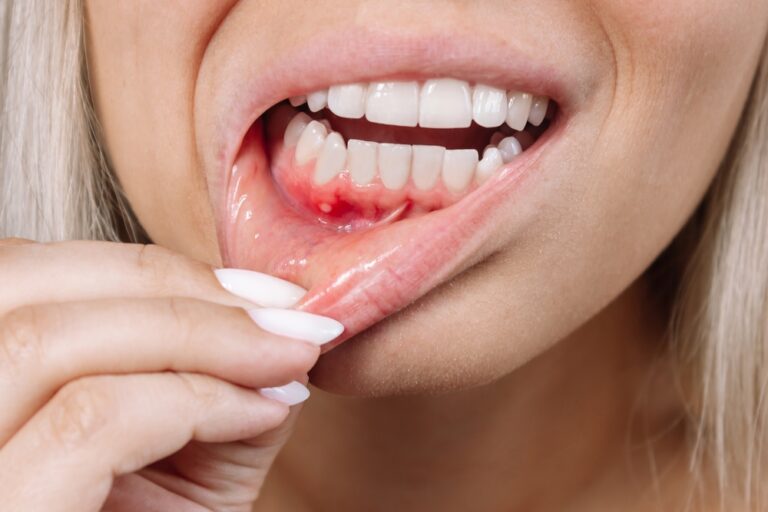
A canker sore is a small round or oval patch in the mouth, typically with a red centre and a gray or white border. They can appear on the cheeks or gums. They often feel hot and painful, and they might be more sensitive to certain foods, like spicy or acidic things.
So, what causes them to appear? While medical professionals might have a few theories about this, there isn’t a definitive cause for canker sores that we know of.
Canker sores can appear following a trauma in the mouth, such as after accidentally biting the inside of your cheek. They can also appear when you are fighting off an infection like a cold or the flu.
They can also appear due to an allergy to something, like your toothpaste or simply due to brushing too vigorously. Sodium lauryl sulphate is an ingredient found in toothpaste, and this can often cause irritation leading to canker sores. It could also be due to irritation from a dental apparatus like braces or a gum shield.
Some people experience them due to vitamin deficiencies, including B12, folic acid and iron. Others will get them due to hormonal changes, or due to emotional stress.
And finally, it could be caused by underlying health conditions, including inflammatory bowel disease and celiac disease.
If you’re getting frequent canker sores, it’s worth looking at mechanical irritation (brushing, braces), ingredient sensitivity (like toothpaste), and nutrition (B12, iron, folate) as your starting points.
How do you prevent canker sores?
If you are experiencing sores that are not healing, it might be time to visit your primary care physician, as there may be an underlying cause that needs further exploration.
If you simply experience them often or infrequently, you might be interested in learning more about how to prevent them so that you no longer have to live with this irritation.
The first step would be to identify why you are getting canker sores. Let’s recap some of the most common reasons that people will get recurring canker sores:
- Biting the inside of your cheek
- Poorly fitting braces
- Brushing too hard
- Toothpaste allergy
- Food sensitivities
- Vitamin deficiencies
- Emotional stress
- Fatigue
- Hormonal changes during menstruation or menopause
- Underlying health conditions affecting the bowel
Once you have narrowed down why you suspect you might be getting canker sores, you can begin to look for ways to eliminate this issue.
For example, if you are allergic to your toothpaste, simply switching to a new brand could help you to find relief. And if your canker sores are linked to a weakened immune system, you can look for ways to boost your overall health in order to remove the threat.
Your primary care physician may be able to support you by offering vitamin deficiency tests to determine if your diet needs to change, or if you need to consider supplementation. If you are following a restrictive diet, you may be at increased risk of vitamin deficiencies.
You might also have an allergy that you are unaware of. Food sensitivities to things like coffee, nuts, citrus fruits, eggs and tomatoes can lead to irritation in your mouth that allows canker sores to form.
Your dentist might also need to weigh in and offer some advice and support. If your canker sores are caused by poorly fitting braces, these will need to be adjusted. And if you often get them because you are biting the inside of your cheeks, your dentist might want to explore if you have a bite alignment issue.
What can you do to heal a canker sore?
While you cannot heal a canker sore, you can make yourself more comfortable while it heals itself. Most canker sores will clear up in 7–14 days, but there are things you can do to make yourself more comfortable during this time.
If your canker sore is caused by irritation from a dental appliance, use dental wax to cover the uncomfortable area until you can see a dentist.
You can also use numbing gel that is applied directly to the area to ease the discomfort. You should also avoid very hot drinks, spicy foods and anything that is acidic or sour, as these could cause irritation.
Frequently asked questions
Why do I keep getting canker sores?
There’s no single known cause, but recurring canker sores are often linked to mouth injuries (like cheek biting), vitamin deficiencies, stress, fatigue, hormonal changes, allergies to toothpaste ingredients, or irritation from braces or dental appliances. They can also be associated with underlying health conditions such as celiac disease or inflammatory bowel disease.
How can I prevent canker sores from forming?
Start by identifying your triggers. Switching toothpastes, adjusting braces, brushing more gently, managing stress, improving your nutrition, or avoiding foods you’re sensitive to could help reduce flare-ups. Your doctor can check for vitamin deficiencies, and your dentist can help resolve bite or appliance issues that contribute to sores.
What can I do to relieve pain from a canker sore?
While you can’t speed up healing, you can ease discomfort. Use numbing gels, avoid spicy, hot, or acidic foods, and apply dental wax to protect areas irritated by braces or appliances. Most canker sores heal on their own within 7–14 days.