

What you need to know
- Psoriasis and eczema are two different chronic skin conditions that look similar to the untrained eye but have different causes and different best treatments. Getting the right diagnosis matters because the medications that help one are not always the right choice for the other.
- For mild-to-moderate disease, topical treatments — moisturizers, topical corticosteroids, and steroid-sparing alternatives — usually do the work. For moderate-to-severe disease, systemic medications including biologics have changed outcomes dramatically.
- Both are long-term conditions, not one-and-done problems. Steady daily care between flares is what keeps the skin well — flare-only treatment alone tends to leave people on a permanent rollercoaster.
Psoriasis and eczema together affect tens of millions of people in the US. They cause itching, redness, scaling, and visible patches that range from minor cosmetic nuisance to disabling whole-body involvement. Both are chronic, both have well-evidenced treatments, and both have seen meaningful breakthroughs in the past decade. The treatments overlap in some places (topical steroids for both, for example) but diverge in important ways once disease becomes more severe.
This article walks through both conditions, explains how topical and systemic treatments compare, and covers the long-term care habits that matter most.
Getting the right diagnosis matters because the medications that help one are not always the right choice for the other.
What each one actually is
Psoriasis
Psoriasis is an immune-mediated condition in which skin cells turn over much faster than normal, building up into thick, scaly plaques. The most common form, plaque psoriasis, shows as well-defined patches with a silvery-white scale, often on the elbows, knees, scalp, and lower back. Less common forms include guttate psoriasis (small drop-like spots, often after a streptococcal infection), inverse psoriasis (in skin folds, typically without scale), pustular psoriasis, and erythrodermic psoriasis (rare and serious). Psoriasis often comes with joint involvement (psoriatic arthritis) in about a third of people, and is associated with cardiovascular disease, metabolic syndrome, and inflammatory bowel disease. It is not contagious.
Eczema (atopic dermatitis)
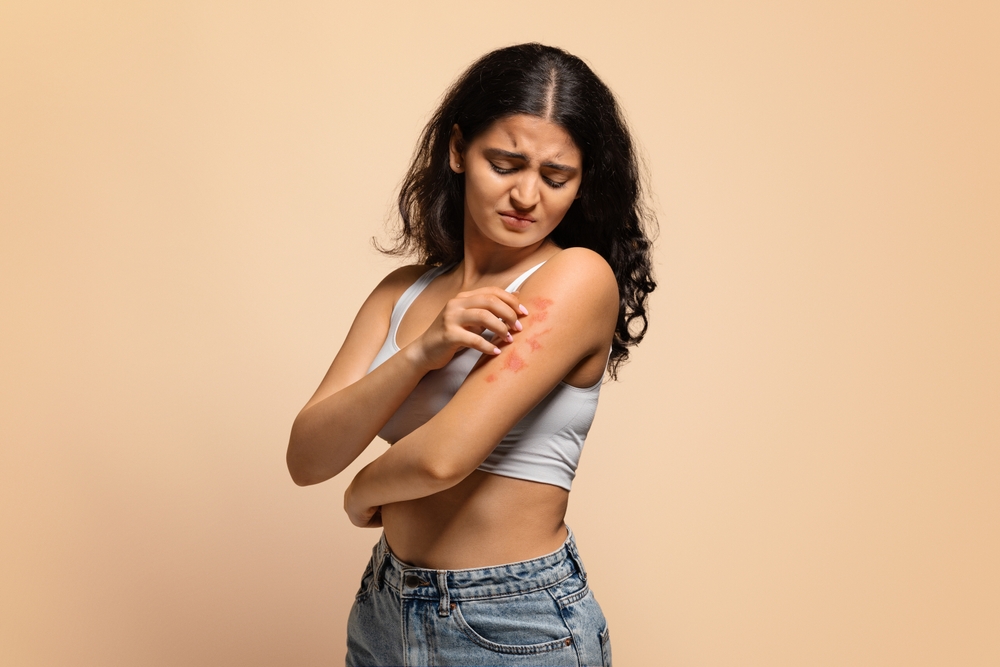
Eczema is the everyday word for atopic dermatitis, a condition in which the skin’s barrier is leaky and the immune system reacts more strongly than it should to ordinary triggers. Patches are typically itchy first, with redness, weeping, crusting, and over time a thickened “lichenified” appearance from chronic scratching. In babies and young children, eczema often shows on the cheeks and the outer surfaces of the limbs; in older children and adults, it tends to settle into the bends of the elbows and knees, the wrists, ankles, and around the eyes. Eczema is part of the “atopic triad” with asthma and allergic rhinitis (hay fever and other allergies) — many people have one or all three. It is not contagious.
Both conditions flare and remit, both worsen with dry skin, stress, and certain triggers, and both can dramatically affect quality of life — sleep, mood, work, and relationships. Stress in particular can worsen both, which is why thinking about how stress shows up physically is part of practical management.
Topical treatments
For most people with mild-to-moderate disease, topicals are the foundation. They work where the disease is, with limited absorption into the rest of the body.
Moisturizers
Daily moisturizing is not optional in either condition. Thick creams or ointments — applied within a few minutes of bathing while the skin is still slightly damp — repair the skin barrier, reduce flares, and stretch out the time between treatment cycles. Thicker is generally better; lotions that pour easily are usually too watery to do much. Look for fragrance-free products and ingredients like ceramides, glycerin, petrolatum, dimethicone, and shea butter.
Topical corticosteroids
Topical steroids reduce inflammation and itch, and remain the most widely used prescription topicals for both psoriasis and eczema. They come in a range of potencies — low-potency hydrocortisone (over the counter for some preparations) up through ultrahigh-potency clobetasol — chosen by location, severity, and age. Common mid-potency choices include triamcinolone, betamethasone, and mometasone.
Used as directed, they are safe and effective. The cautions are about long-term continuous use of stronger steroids on thinner skin (face, groin, armpits) — that is where skin thinning, stretch marks, and other side effects occur. The fix is mostly about using them in a planned way: short courses for flares, alternating with steroid-sparing options for maintenance, and lower potencies on sensitive areas.
Steroid-sparing topicals
- Topical calcineurin inhibitors (tacrolimus ointment, pimecrolimus cream) are non-steroidal anti-inflammatories useful on the face, eyelids, and skin folds where steroids are limited. They work for both psoriasis and eczema.
- Vitamin D analogs (calcipotriene, calcitriol) are specifically for psoriasis. They are often combined with a topical steroid in a single product.
- Topical JAK inhibitors — ruxolitinib cream is approved for atopic dermatitis (and a separate condition called vitiligo). It is a non-steroidal option for moderate eczema, with strong evidence for itch and inflammation.
- Topical PDE-4 inhibitors (crisaborole, roflumilast) are steroid-free options for eczema (crisaborole) and psoriasis (roflumilast).
- Tazarotene is a topical retinoid used for plaque psoriasis, often combined with steroids.
- Coal tar and salicylic acid have a long history in psoriasis, particularly for scalp involvement. They are old-school but still used.
Steady daily care between flares is what keeps the skin well — flare-only treatment alone tends to leave people on a permanent rollercoaster.
Systemic treatments
When skin disease is widespread, severe, or significantly affecting quality of life, systemic treatments — medications that work throughout the body — come into play. The available options have expanded dramatically in the last 10 to 15 years.
Conventional systemics
Older systemic medications include methotrexate (used for moderate-to-severe psoriasis and sometimes eczema), cyclosporine (effective and fast-acting but limited to short courses because of kidney and blood pressure effects), and acitretin (an oral retinoid for psoriasis). They are less expensive than newer biologics and still useful in many situations, but they require regular monitoring with blood tests.
Biologics
Biologics are protein-based medications, given by injection or infusion, that target specific parts of the immune system. They have transformed the outlook for moderate-to-severe psoriasis and eczema, and the menu now varies by condition.
For psoriasis:
- TNF inhibitors — adalimumab (Humira), etanercept (Enbrel), infliximab (Remicade), certolizumab pegol (Cimzia). The oldest biologic class for psoriasis.
- IL-17 inhibitors — secukinumab (Cosentyx), ixekizumab (Taltz), brodalumab (Siliq), bimekizumab (Bimzelx). Very effective for skin clearance.
- IL-23 inhibitors — guselkumab (Tremfya), risankizumab (Skyrizi), tildrakizumab (Ilumya). Often achieve high rates of nearly clear skin with quarterly dosing.
- IL-12/23 inhibitor — ustekinumab (Stelara). Established and well tolerated.
For eczema:
- IL-4/IL-13 pathway inhibitor — dupilumab (Dupixent). The first biologic approved for atopic dermatitis, also used for asthma and certain other allergic conditions.
- IL-13 inhibitors — tralokinumab (Adbry), lebrikizumab (Ebglyss).
- IL-31 inhibitor — nemolizumab (Nemluvio), targeting itch.
Oral targeted therapies
- Apremilast (Otezla) — an oral PDE-4 inhibitor for psoriasis.
- Deucravacitinib (Sotyktu) — an oral TYK2 inhibitor for psoriasis.
- Oral JAK inhibitors — abrocitinib (Cibinqo) and upadacitinib (Rinvoq) for moderate-to-severe atopic dermatitis. Effective and convenient as pills, but with class warnings about cardiovascular and infection risks that mean they are typically used after biologics in most patients.
Long-term care tips
These are the small habits that, accumulated, do more than any single prescription.
- Moisturize daily, not just during flares. The skin barrier needs ongoing repair even when things look quiet.
- Bathe in lukewarm water, keep showers short, and use a gentle, fragrance-free cleanser. Pat (do not rub) dry, and apply moisturizer within 3 minutes.
- For eczema, identify and avoid triggers — common ones include certain fabrics (wool, synthetics), fragranced laundry detergent, sweat, dust mites, pet dander, and dry winter air. A humidifier in winter helps many people.
- For psoriasis, manage what worsens it — heavy alcohol use, smoking, untreated streptococcal infections, certain medications (lithium, beta-blockers, sometimes antimalarials), and skin trauma can all trigger flares. Stress is a trigger in both conditions.
- Treat early. Catching a flare in its first day or two with topical treatment usually shortens it considerably. Waiting until the patch is large and lichenified makes it harder to settle.
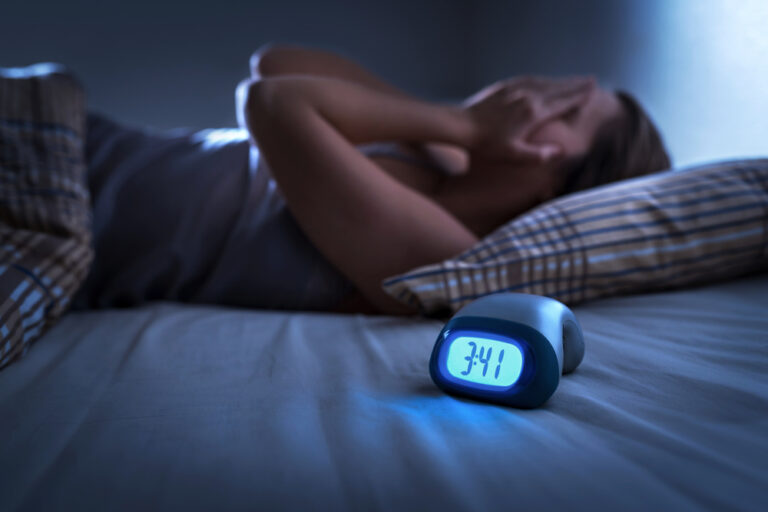
- Sleep matters. Itch is worst at night for many people, and poor sleep itself raises inflammation. Anti-itch strategies — antihistamines at bedtime, topical anti-itch creams, cool compresses, and treating skin disease aggressively — protect sleep, which protects skin.
- Mind the comorbidities. Psoriasis raises cardiovascular and metabolic risk; eczema is linked to asthma, allergies, and food sensitivities. Routine checkups should look for these, not just the skin.
When to see a doctor
Talk to a clinician about a chronic skin condition that is itchy, painful, scaling, or visibly bothering you — particularly if drugstore moisturizers and over-the-counter hydrocortisone are not enough. A primary care provider can manage many cases of mild psoriasis or eczema. A dermatologist is the right next step for unclear diagnoses, widespread disease, biologic-eligible severity, or skin in sensitive areas like the face and genitals.
Get prompt evaluation for sudden widespread redness with peeling, fever, or feeling unwell — this could signal erythrodermic psoriasis, severe eczema with infection, or a drug reaction, all of which need same-day care. Persistent thickened patches that change in shape or color, or any new growth that bleeds, should be checked to rule out skin cancer.
Frequently asked questions
Will steroid creams thin my skin if I use them long-term?
Used appropriately, no — most people use topical steroids without problems for years. The thinning, stretch marks, and other side effects come from continuous use of stronger steroids on thinner skin (face, eyelids, skin folds) for long periods. Following the principle of “lowest potency that works, in courses, with sensitive areas treated more cautiously” prevents almost all of this. If you are needing high-potency steroid daily for months at a stretch, that is a sign your treatment plan needs adjusting — not necessarily that the steroid itself is the problem.
Can diet cure psoriasis or eczema?
No specific diet has been shown to cure either, but lifestyle factors do affect outcomes. For psoriasis, weight loss in people who are overweight improves both skin disease and how well treatments work. For eczema, true food allergies sometimes worsen symptoms and warrant proper allergy evaluation, but most people do not benefit from cutting out major food groups. Restrictive elimination diets are not first-line for either condition and risk nutritional gaps. Anti-inflammatory eating patterns like the Mediterranean diet are reasonable for general health and may help modestly, but they are an addition to treatment, not a replacement.
Will my children inherit this?
Both conditions have a genetic component but neither is purely inherited. Psoriasis runs in families — having one parent with psoriasis increases the risk by several-fold; having both parents with psoriasis raises it further. Eczema follows a similar pattern, often alongside asthma and allergies, and the strongest predictor of childhood eczema is parental atopic disease. Most children of affected parents do not develop the condition, and those who do can be effectively treated. Early skin care in babies at high risk — daily moisturizing from birth — has shown some promise in reducing eczema risk, though evidence is still evolving.