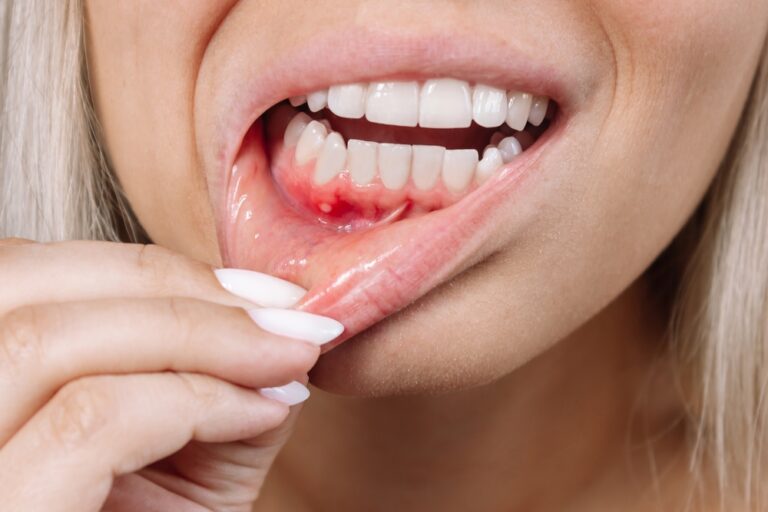

Mouth Ulcers
Mouth ulcers are small, painful sores that develop on the soft tissues inside the mouth, including the cheeks, lips, tongue, gums, or roof of the mouth. They are common and can make eating, drinking, and speaking uncomfortable. Mouth ulcers are not contagious and often heal on their own within one to two weeks.
Common triggers include minor mouth injuries, stress, hormonal changes, certain foods, and nutritional deficiencies such as low iron or vitamin B12. In some cases, mouth ulcers may be linked to immune system responses, gastrointestinal conditions, or reactions to dental products.
Most mouth ulcers improve with simple self-care measures such as saltwater rinses, topical treatments, and avoiding foods that irritate the area. However, ulcers that are unusually large, persistent, frequently recurring, or accompanied by other symptoms may need medical or dental evaluation. This section explores the causes of mouth ulcers, typical symptoms, treatment options, and signs that indicate professional advice should be sought.
Mouth Ulcers Medications


Retail Price: $25.30
Related health insights